Context Switching
The mental cost of shifting between unrelated tasks, which reduces focus, slows down progress, and can introduce errors into web design and development projects.
What is context switching and why is it bad for your web design project?
Imagine you're trying to cook two completely different meals at the same time in one kitchen. You're constantly checking different recipes, grabbing different ingredients, and adjusting different temperatures. Every time you switch, you lose a bit of focus and momentum. That's context switching. It's the mental effort required to shift your attention from one unrelated task to another.
In a web design project, this might look like jumping from designing a logo in Figma, to writing copy for an about page, to answering an urgent email about a different project. Each switch forces your brain to 'reload' the specific context, rules, and goals of that task. This reload time is where efficiency is lost, and it's why a day filled with multitasking can feel busy but ultimately unproductive.
The result is not just slower progress. It's also diluted focus, which increases the risk of mistakes and lowers the overall quality of the creative work. Deep, thoughtful design and development require sustained concentration, and context switching is the enemy of that flow state.
How does a subscription agency model help reduce context switching?
The traditional agency model often involves juggling multiple projects for multiple clients simultaneously. This environment is a breeding ground for context switching, with teams constantly being pulled in different directions. This can lead to delays and a feeling that your project is never the top priority.
A modern productised service or subscription model, like the one we use at Tahi Studio, is deliberately designed to minimise this. By focusing on one active request at a time for each client, we create a dedicated space for deep work. This isn't about working slower; it's about working smarter and with more focus.
This approach allows our designers and developers to fully immerse themselves in your project. They build momentum, stay in a state of flow, and solve problems more effectively because they aren't mentally juggling the needs of another client's brand. It's a core part of how we build better partnerships, which we discuss in our blog post, Beyond Billable Hours: The Productised Agency Shift.
Can multitasking or context switching lead to more mistakes in Webflow development?
Yes, absolutely. High-quality Webflow development requires incredible attention to detail. When we build sites using a structured system like Client-First, we're creating a logical and scalable foundation. It’s far more than just dragging and dropping elements onto a page; it’s a form of visual engineering.
When a developer is forced to switch between a complex Webflow build and a quick bug fix on another site, small but crucial details can be missed. They might forget a specific class name convention, apply an interaction incorrectly, or overlook an important accessibility attribute. These minor errors accumulate over time, creating what is known as Technical Debt, which makes the website much harder to manage and update in the future.
This is especially true for tasks that involve custom code, CMS connections, or complex integrations. A single moment of broken concentration can easily lead to hours of frustrating debugging work down the line.
What is the impact of context switching on an agency's productivity and focus?
For any agency, context switching is a hidden cost that quietly drains resources and erodes quality. It creates the illusion of being busy while masking a lack of real, meaningful progress. Every time a team member switches between different clients, projects, and communication channels, it chips away at the time available for the deep, focused work that produces exceptional results.
This constant mental friction can lead to team burnout, an increase in mistakes, and a general decline in the quality and creativity of the work. An agency that is always switching contexts is an agency that is always reacting to the next urgent thing, rather than proactively and thoughtfully executing a plan. It's a recipe for shallow work and stressed-out teams.
How does Tahi Studio's model ensure deep focus on your project?
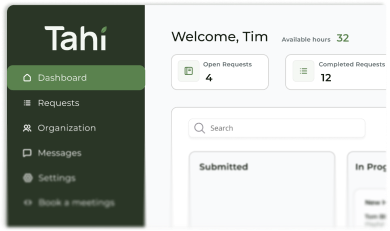
We have intentionally designed our entire workflow to eliminate the negative effects of context switching. Our subscription model is built around the core principle of 'one active request at a time'. We see this not as a limitation, but as a powerful guarantee of quality for your project.
When your task is active in our task queue, it receives our team's complete and undivided attention. Our designers and developers can fully immerse themselves in your brand, your strategic goals, and the specific challenge at hand. This deep focus leads to more creative solutions, faster genuine progress, and a higher standard of work from start to finish.
By removing the constant juggling act, we create a calm, focused, and productive environment that delivers the thoughtful work your business deserves. If you're ready for a partnership that gives your project the attention it needs to thrive, take a look at our flexible plans and see how a focused approach can make all the difference.