Webflow
How a Well-Built Webflow CMS Gives Marketing Teams Real Content Independence
Enterprise marketing teams shouldn't need a developer to update a headline. Here's how we structure Webflow CMS builds that give your team genuine control.

Why Your CMS Is More Than Just a Tool
As a developer, I have seen the same story play out countless times. A marketing team has a fantastic idea for a new landing page or a simple blog post. It should be a quick job, an hour at most. Instead, it turns into a day long saga of support tickets, developer intervention, and mounting frustration. Why? Because the website's Content Management System, or Webflow CMS, was built as an afterthought. It was a technical box to tick, not a tool designed for the people who would use it every day.
A CMS should not be a barrier. It should be an accelerator. A well-built, intuitive CMS is a strategic business asset that empowers your team, streamlines your workflows, and directly contributes to your bottom line. It is the difference between feeling shackled to your website and feeling liberated by it. It is about handing over the keys with confidence, knowing your team can drive your digital presence forward without needing a developer in the passenger seat for every little turn.
The Hidden Costs of a Clunky CMS
A poorly constructed CMS does more than just cause frustration. It quietly drains resources and creates significant business risks that many leaders overlook until it is too late.
Wasted Time and Stifled Agility
The most immediate cost is lost time. When your team has to fight the system to publish an article, update a team member's bio, or add a new case study, that is time they are not spending on strategy, creation, or engaging with customers. Marketing campaigns lose momentum when launching a simple landing page requires a complex developer handoff. This agility gap means missed opportunities in a fast moving market.
Creeping Technical Debt
Every time a developer has to create a workaround or apply a quick fix to a rigid CMS, it adds to your website's technical debt. These short term solutions create a tangled, unstable foundation that becomes increasingly difficult and expensive to maintain or build upon. Eventually, a simple site-wide update becomes a major, high risk project, all because the initial structure was not built for growth.
Increased Risk of Human Error
When a CMS is confusing, it is only a matter of time before someone accidentally breaks something. A non-technical user trying to navigate a complex backend might delete a critical element or disrupt the site's layout. This not only damages the user experience but can also lead to costly downtime while your development team scrambles to fix it.
The Tahi Approach: Building for People
At Tahi Studio, we believe a CMS should be built for humans first. Our approach is grounded in empathy for the end user, whether that is a marketer, a content writer, or a sales manager. We design the backend of your website with the same care and attention to detail as the front end.
Clarity and Intuitive Design
We use clear, descriptive labels for every field. We provide helpful instructional text right where you need it. We organise content collections logically, mirroring how your business actually thinks about its information. The goal is simple. Anyone on your team should be able to log in, understand the layout immediately, and feel confident making changes.
The Power of Components
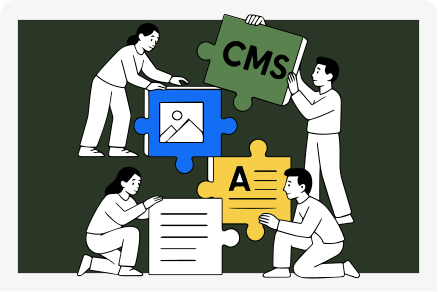
We build using a component-based design philosophy. Instead of giving you a blank, intimidating page, we create a library of pre-designed, on-brand sections. Your marketing team can then assemble new pages using these blocks, like playing with Lego. They have the creative freedom to build what they need, while we ensure brand consistency and technical integrity are baked into every component. This is how you can give your team the power to confidently take the keys to your website.
The Measurable Impact on Your Business
Moving to a well-structured Webflow CMS is not just about making life easier for your team. It delivers tangible results that you can see in your analytics and on your balance sheet.
Blazing Fast Performance and Conversions
Webflow's underlying infrastructure is built for speed, with clean code generation and a global content delivery network (CDN). When we build a site on this foundation, the results are significant. Research shows that every one second improvement in load time can boost conversions by up to 7%. In a real world example, the tech giant Rakuten saw a staggering 27.9% decline in bounce rates after migrating to Webflow, simply because their site became faster and more responsive. Faster sites mean happier users, and happier users are more likely to convert.
Future-Proofed SEO Foundations
A great Webflow SEO strategy starts with a solid technical foundation. A well organised CMS makes this easy. It allows your team to effortlessly manage meta titles, descriptions, image alt text, and structured data for every page. Webflow's platform generates clean, semantic HTML that search engines love to crawl. We saw this pay off directly for Elevate, where a tighter content architecture and cleaner CMS structure helped lift organic traffic by 16% within the first month of launch, with zero developer involvement in the day-to-day content operation.
From Silos to Seamless Collaboration
Perhaps the most powerful transformation we see is how a great CMS changes the way teams work together. It breaks down the walls that typically exist between marketing, design, and development.
- Marketing Autonomy: When the marketing team can launch campaigns and create content independently, they become more proactive and effective. Physitrack is a strong example: by rebuilding their CMS with marketing independence at its core, the team could iterate on campaign pages and update content without waiting on development resource. The team at Lattice, a people management platform, saw a significant increase in organic traffic and conversions for the same reason.
- Designer-Driven Development: Webflow's visual development allows designers to build and iterate directly, reducing the back and forth with developers. This ensures the final product is true to their vision and drastically speeds up the entire creative process.
- Developer Innovation: When developers are freed from routine CMS updates, they can focus on what they do best, solving complex problems and driving innovation. They can work on high value projects like custom API integrations or interactive features that truly differentiate your business. As a result, businesses have found Webflow to be up to 4-5 times cheaper than hiring developers for similar outcomes.
Is Your CMS an Asset or an Anchor?
Your website should be your hardest working employee, not your most frustrating one. If your team is held back by a clunky, confusing, or restrictive system, you are leaving money on the table and stifling your own growth potential. A thoughtfully crafted Webflow CMS is an investment in efficiency, autonomy, and performance.
It transforms your website from a static brochure into a dynamic engine for growth, managed by an empowered and agile team. If you are tired of fighting your website and ready to unlock your team's true potential, it might be time for a change.
We are here to help you build a digital foundation that works for you, not against you. Feel free to explore our pricing plans or get in touch for a free site audit. Let's have a genuine conversation about what your business needs.